
2026-10-08 · Mike Henderson
How Tree Roots Impact Sewer Lines in Missouri Clay Soil
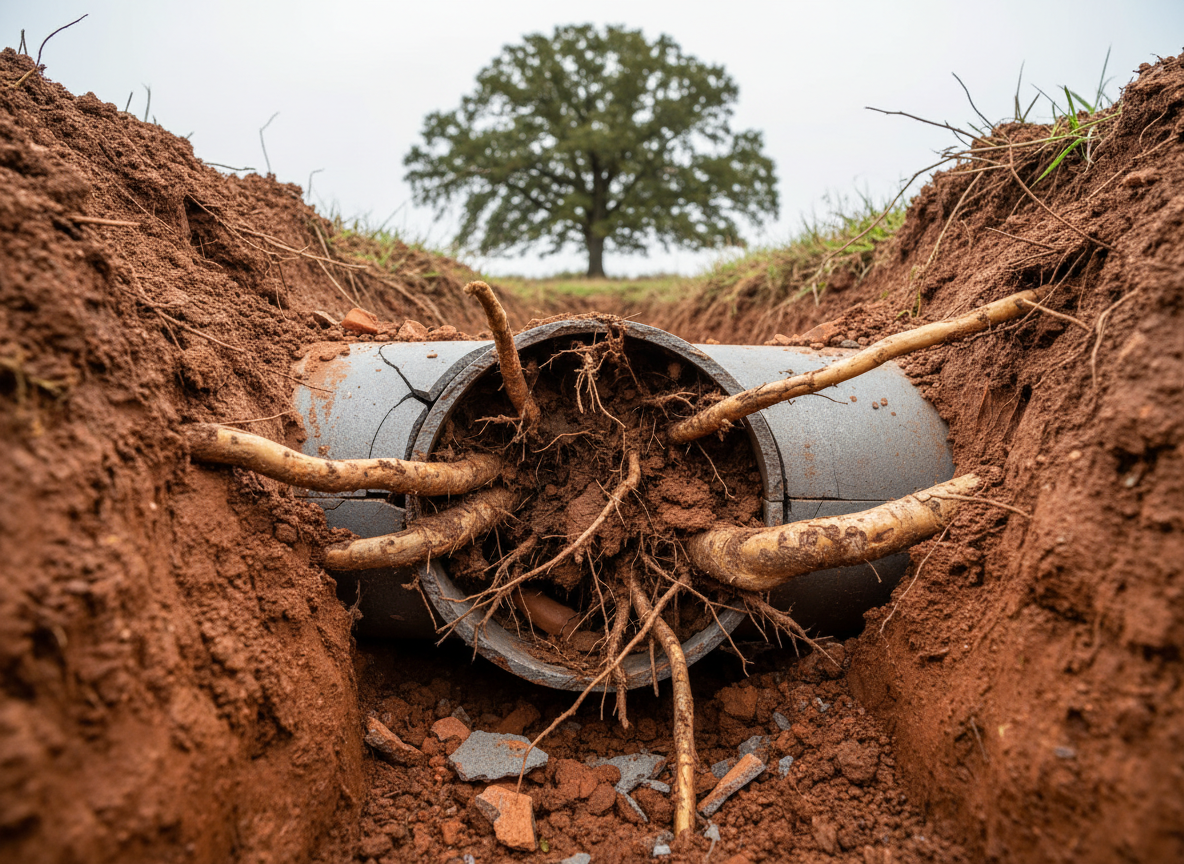
Tree roots pose a substantial and pervasive threat to sewer lines across Missouri, primarily due to the unique interaction with our region's prevalent clay soil. This dense, expansive soil type, common from the Kansas City metropolitan area all the way to the Saint Louis region, creates an environment where tree roots are naturally drawn to the consistent moisture and nutrients found within sewer pipes. Once these microscopic roots find a hairline crack or a loose joint in a pipe, they exploit it, growing rapidly and forming a dense mat that can completely obstruct flow, leading to significant backups and costly damage. The clay soil exacerbates the problem by exerting pressure on pipes, making them more susceptible to cracking, and by retaining moisture, which signals to nearby roots that a water source is close. Homeowners in areas like Lee's Summit, Blue Springs, and even more rural communities in the Across Missouri area frequently encounter these issues, often requiring professional intervention to restore proper drainage.
The Allure of Sewer Lines for Tree Roots in Clay Soil
Missouri's clay soil, while fertile, is also notorious for its density and tendency to shrink and swell with moisture content. During dry spells, especially common in late summer and early fall, the soil around sewer lines can compact, creating tiny gaps or even causing pipes to shift slightly. This movement, combined with the inherent porosity of older pipe materials like vitrified clay or cast iron, provides the perfect entry points for inquisitive tree roots. Roots are not actively seeking to destroy pipes; rather, they are simply seeking water, oxygen, and nutrients—all of which are abundantly present within a sewer line. The consistent flow of wastewater acts as a powerful beacon, drawing roots from dozens of feet away. Once inside, the warm, moist, nutrient-rich environment becomes an ideal incubator, allowing roots to grow quickly and aggressively, forming thick, fibrous masses that reduce the pipe's internal diameter and eventually block it completely. This natural phenomenon is a major reason why homeowners often experience recurring drain clogs and backups.
How Clay Soil Exacerbates Root Intrusion and Damage
The heavy clay content in Missouri's soil plays a dual role in making sewer lines vulnerable to root intrusion. Firstly, its expansive nature means that as the soil absorbs water, it swells and puts immense pressure on buried pipes. Conversely, when it dries out, it shrinks, which can cause pipes to settle unevenly or develop hairline fractures. These constant shifts, known as soil heave and subsidence, create and widen the very cracks and loose joints that tree roots exploit. Secondly, clay soil drains slowly and retains moisture for extended periods. This means that even a small leak from a sewer pipe can saturate the surrounding soil, creating a highly attractive, localized water source that draws roots directly towards the pipe. Unlike sandy or loamy soils that allow water to dissipate quickly, clay holds onto it, effectively 'advertising' the presence of a leaky sewer line to every tree and shrub in the vicinity. This makes proactive maintenance and early detection crucial for homes in the Across Missouri area.
Identifying the Signs of Tree Roots in Your Sewer Line
Recognizing the early warning signs of root intrusion can save homeowners significant repair costs and prevent catastrophic sewer backups. One of the most common indicators is slow draining in multiple fixtures throughout your home, not just one. If your sinks, showers, and toilets are all draining sluggishly, it often points to a blockage in the main sewer line. Another tell-tale sign is gurgling noises coming from toilets or drains, particularly after flushing or using other plumbing fixtures. This sound indicates that air is being trapped and pushed through a partially obstructed pipe. Additionally, sewage odors emanating from drains, or even from your yard, can signal a compromised sewer line. In more advanced stages, you might notice sewage backing up into your bathtub, shower, or lowest-level toilet. If you observe any of these symptoms, especially recurring ones, it's highly advisable to schedule a professional inspection, such as a Drain Camera Inspection, to accurately diagnose the problem before it escalates into a full-blown emergency.
Effective Solutions for Tree Root Removal and Prevention
When tree roots have already infiltrated your sewer line, several effective strategies can be employed for removal. The most common immediate solution is mechanical root cutting, often performed with specialized drain snaking equipment that features rotating blades designed to cut through and break up root masses. For more stubborn or extensive intrusions, hydro jetting is an incredibly powerful method, using high-pressure water streams (up to 4,000 PSI) to scour the pipe walls, remove roots, and clear away any accumulated debris. This method is particularly effective for thoroughly cleaning pipes and preventing immediate recurrence. After roots are cleared, it's crucial to consider preventative measures. One option is chemical root inhibitors, which can be flushed down the toilet periodically to discourage root regrowth. However, the most permanent solution often involves repairing or replacing the damaged section of pipe, especially if it's old, cracked, or made of materials prone to root intrusion. For severe or recurring issues, our Root Removal From Drains service is specifically designed to address these challenges head-on.
Long-Term Strategies to Protect Your Sewer Lines
Preventing future root intrusion requires a proactive approach, especially for properties in the Across Missouri area with mature trees and clay soil. Mapping out the location of your sewer lines in relation to large trees is a critical first step; consider planting new trees and shrubs a safe distance away from underground pipes. For existing trees, installing root barriers can be an effective physical deterrent. These barriers, made of plastic or fabric, are buried vertically in the ground to redirect root growth away from sewer lines. Another long-term strategy involves upgrading older, more susceptible pipe materials. If you have original clay or cast iron pipes that are frequently plagued by roots, investing in a sewer line replacement with modern, seamless PVC piping can eliminate future root problems entirely. Regular Drain Camera Inspection every 2–3 years can also help monitor the condition of your pipes and detect early signs of root growth before they cause significant damage. By combining these strategies, homeowners can significantly reduce the risk and cost associated with tree root invasions in their sewer systems. For more insights on managing drainage issues in our local climate, you might find our article on [Preparing Yard Drains Before Missouri's Fall Leaf Drop](/blog/preparing-yard-drains-before-missouris-fall-le